“Turnitin’s algorithms look for structural and semantic similarity — not just identical words. Simply swapping synonyms is not enough.”
Worried about your Turnitin similarity score? Our plagiarism checking service uses Turnitin to give you an accurate score before you submit — so you know exactly where you stand. Get an instant quote.
How Turnitin Works
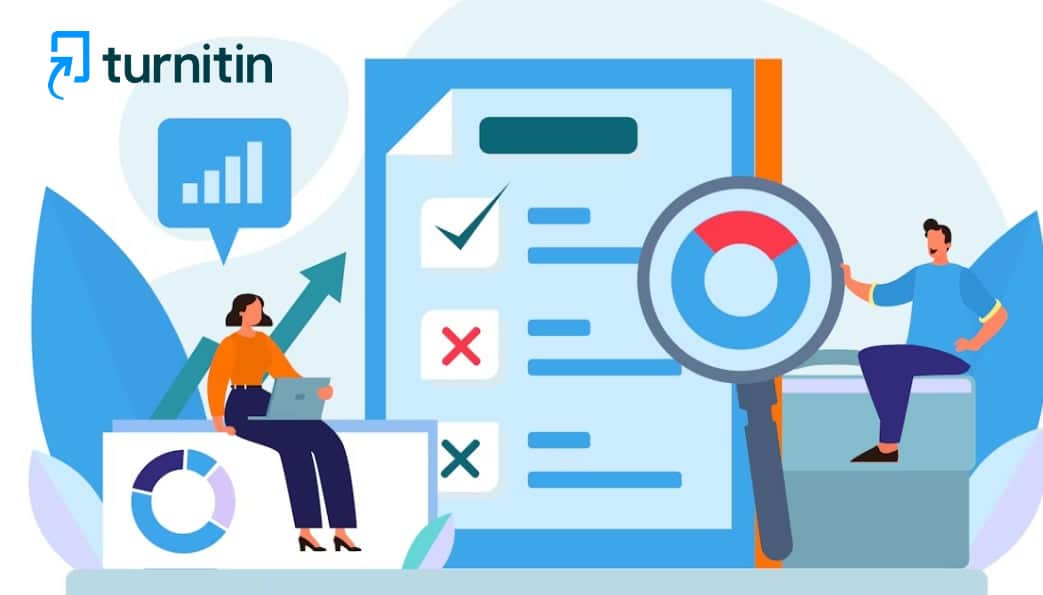
Turnitin is a plagiarism detection platform used by the majority of UK universities to check student submissions for originality. When you submit a document, Turnitin compares your text against a vast database that includes published academic journals and books, billions of web pages, previously submitted student work from institutions around the world, and news articles and other published material.
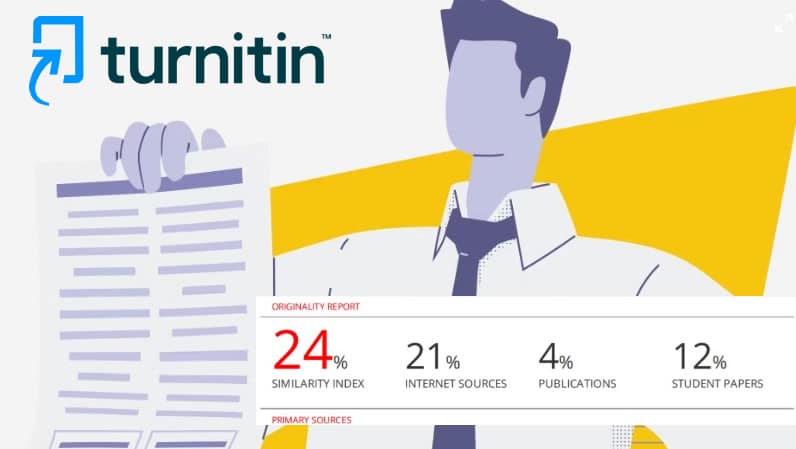
The result is a similarity score — a percentage indicating how much of your text matches content already in Turnitin’s database. Matched sections are highlighted in the Similarity Report, along with the specific sources they match.
It is important to understand that Turnitin does not simply look for copied text. Its algorithms are designed to identify textual similarity even when the original has been modified — which is precisely how it approaches paraphrased content.
Can Turnitin Detect Paraphrasing?
The short answer is: it depends on how closely you have paraphrased.
Turnitin can detect close paraphrasing. If you have taken a sentence or passage from a source and changed only a few words — replacing some with synonyms, slightly reordering the sentence structure — while keeping the overall phrasing and structure of the original, Turnitin is likely to flag this as a match.
Turnitin is less likely to detect thorough paraphrasing. If you have genuinely rewritten a source — using entirely different sentence structures, expressing the idea in your own words, and then adding a citation — the similarity is much lower. This is what proper paraphrasing actually looks like.
According to academic integrity guidance published by Jisc, the distinction between acceptable paraphrasing and plagiarism is not simply about whether the words have been changed — it is about whether the work genuinely reflects the student’s own understanding and expression of the source material.
What Is Mosaic Plagiarism?
Mosaic plagiarism — also known as patchwork plagiarism — is one of the most common forms of academic dishonesty, and one that many students commit without fully realising what they are doing. It occurs when a student takes text from a source and makes superficial changes without genuinely rewriting the content in their own words and without properly attributing it.
Here is an example:
| Original Source |
Mosaic Plagiarism ❌ |
Correct Paraphrasing ✅ |
| Climate change poses an existential threat to global biodiversity, with rising temperatures disrupting ecosystems at an unprecedented rate. |
Global warming presents an existential danger to worldwide biodiversity, as increasing temperatures are disturbing ecosystems at an unprecedented pace. |
According to [Author, Year], the accelerating pace of climate change represents one of the most serious threats to the world’s ecosystems, with temperature increases driving rapid and widespread disruption to biodiversity. |
The middle version swaps words for synonyms but keeps the same structure — this is mosaic plagiarism. The right-hand version genuinely rewrites the idea in the student’s own words and adds a citation — this is correct paraphrasing.
How to Paraphrase Correctly
Proper paraphrasing is a skill that takes practice — but the principle is straightforward.
1. Read and Understand the Source
Before you attempt to paraphrase, make sure you genuinely understand what the source is saying. Read the passage several times until you can explain the idea in your own words without looking at it.
2. Close the Source
This is the most important step. Close the book, close the tab, put the article face down. Then write the idea in your own words from memory. This forces you to express the idea genuinely rather than just rearranging the original’s words.
3. Use Different Sentence Structures
Do not just replace words with synonyms. Change the sentence structure entirely. If the original uses a complex compound sentence, use two shorter sentences. The structure of your paraphrase should look nothing like the original.
4. Always Add a Citation
Even when you have paraphrased correctly, you must still cite the source. Paraphrasing without attribution is still plagiarism. Our guide on Harvard referencing covers how to cite paraphrased sources correctly.
5. Check Your Work
Once you have written your paraphrase, compare it to the original. If the structure is similar or key phrases have simply been swapped for synonyms, revise it further.
Struggling to paraphrase complex academic content? Our professional paraphrasing service rewrites your content into genuinely original language while preserving your intended meaning. Get an instant quote.
What to Do If Your Similarity Score Is Too High
If your Turnitin similarity score is higher than expected, the first step is to open the full Similarity Report and identify what is causing it. Focus on highlighted sections that represent closely paraphrased content without proper attribution. For each one:
- Close the source and rewrite the passage genuinely in your own words
- Ensure a proper citation is added
- Check the rewritten version against the original to confirm it is genuinely different
For a detailed guide, see our article on how to reduce your Turnitin similarity score legitimately.
Getting Professional Help
If your similarity score is high and your deadline is close, professional support can make a significant difference. Our plagiarism checking service uses Turnitin to generate a detailed report showing exactly where your matches are — giving you an accurate, actionable picture before your university runs its own check. Your document is not added to any database.
If the report identifies sections that need rewriting, our professional paraphrasing service can rewrite flagged sections into genuinely original language while maintaining your argument and meaning. If you are weighing up whether to paraphrase yourself or use a professional service, our guide on paraphrasing service vs doing it yourself covers the key considerations.
Check your similarity score before your university does.
Our Turnitin-powered plagiarism checking service returns a full similarity report within 24 hours. Your document is never added to any database. Full money-back guarantee.
Frequently Asked Questions
Can Turnitin detect paraphrasing?
Yes — Turnitin can detect close paraphrasing where the original structure and phrasing of a source has been retained while individual words have been changed. Its algorithms look for structural and semantic similarity, not just word-for-word matches. Thorough paraphrasing — where the idea is genuinely rewritten in the student’s own words — is much harder for Turnitin to detect, and is also the correct academic approach.
Does paraphrasing count as plagiarism?
Poor paraphrasing — where the original’s structure and phrasing are retained with only superficial word changes — is considered mosaic plagiarism. Proper paraphrasing, where the idea is genuinely expressed in your own words and properly cited, is not plagiarism.
Will changing every word avoid Turnitin detection?
Not necessarily. Turnitin’s algorithms look for structural and semantic similarity, not just identical words. Replacing every word with a synonym while keeping the same sentence structure will often still be flagged. Genuine paraphrasing requires changing the structure of the sentence, not just the individual words.
Do paraphrasing tools work to avoid Turnitin?
Automated paraphrasing tools typically produce low-quality writing that is structurally similar to the original. They are also increasingly detectable. More importantly, using a paraphrasing tool to disguise plagiarism is itself considered academic misconduct. Our professional paraphrasing service is very different — it involves genuine rewriting by human editors.
Can I get a Turnitin report before submitting to my university?
Yes — our plagiarism checking service gives you a full Turnitin similarity report before your university sees your work. Your document is not added to any database. Results are returned within 24 hours.
How do I use Turnitin to check my similarity score?
If your university gives you access to Turnitin, our complete guide on how to use Turnitin walks you through the entire process step by step — from submitting your document to reading your similarity report correctly.
Key Takeaways
Turnitin detects structural and semantic similarity — not just identical words
Mosaic plagiarism — synonym swapping — is detectable and counts as misconduct
Always close the source before rewriting — never paraphrase with it open
Even correct paraphrasing requires a citation — ideas must be attributed
A high similarity score needs addressing before you submit
Professional paraphrasing and plagiarism checking can help before your deadline
Submit your document today for a professional plagiarism check or paraphrasing service — returned within 24 hours with a full money-back guarantee.