If you have ever submitted an essay or dissertation through your university’s online portal, you have probably encountered a similarity score. For many students, that percentage number — particularly when it comes back higher than expected — causes immediate anxiety. But a similarity score is widely misunderstood.
It is not a plagiarism verdict, it is not a pass or fail, and a high number does not automatically mean you have done something wrong. This guide explains exactly what a similarity score is, how it is calculated, what the colours and percentages mean, and what you should do if yours needs attention.
What Is a Similarity Score?
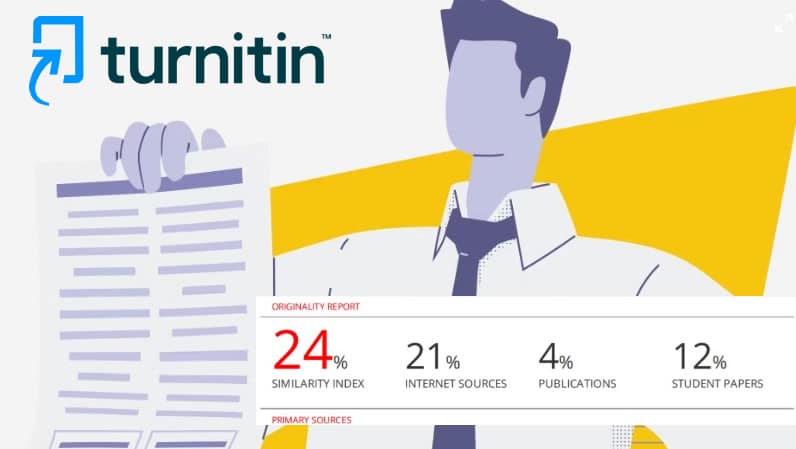
A similarity score is a percentage produced by plagiarism detection software — most commonly Turnitin — that indicates how much of your submitted document matches text found in other sources. Those sources include published academic papers, books, websites, news articles and previously submitted student work from institutions around the world.
The score is expressed as a percentage. For example, a similarity score of 18% means that 18% of the text in your document has been identified as matching content that already exists elsewhere in Turnitin’s database.
It is important to be clear about what the score represents: it is a measure of textual similarity, not a measure of plagiarism. The score tells you how much of your text matches other sources — it does not tell you whether those matches are problematic. That distinction is crucial and is one that many students misunderstand when they first encounter their results.
How Is a Similarity Score Calculated?
Turnitin uses sophisticated algorithms to compare your submitted text against its database. The process works as follows:
Text extraction — Turnitin extracts the text from your submitted document, whether it is a Word file, PDF or other accepted format.
Database comparison — your text is compared against Turnitin’s database, which includes billions of web pages, academic publications and a repository of previously submitted student papers.
Match identification — sections of your text that match content in the database are flagged and highlighted in the Similarity Report.
Score calculation — the percentage of your total word count that matches other sources is calculated and displayed as your similarity score.
The score can be influenced by a number of factors, including whether your bibliography is included in the calculation, whether quoted material is excluded, and whether small matches below a certain word threshold are filtered out. Many of these settings can be adjusted either by your institution or when you submit.
Understanding the Colour Coding
Turnitin displays your similarity score with a colour indicator that provides a quick visual guide to where your score sits. The colours are as follows:
Blue — 0%: No matching text found.
Green — 1–24%: Low similarity. Generally considered acceptable, though context still matters.
Yellow — 25–49%: Moderate similarity. Likely to be reviewed by your tutor.
Orange — 50–74%: High similarity. Almost certainly flagged for investigation.
Red — 75–100%: Very high similarity. Likely to be treated as a serious academic integrity concern.
These colour bands are a guide rather than a definitive verdict. A green score does not guarantee no plagiarism concern, and an orange score does not automatically mean disciplinary action will follow. Your institution’s academic integrity team will always review the full report rather than acting on the colour alone.
What Different Percentages Mean
While there is no universal threshold, here is a practical guide to interpreting common score ranges in the context of most UK universities:
Under 15% — Low Risk
A score in this range is generally considered low risk and is unlikely to cause concern. Some similarity at this level is entirely expected in well-researched academic work — it typically reflects correctly cited quotes, standard academic phrases and reference list entries. Most tutors will not query a score in this range unless the matched content appears suspicious on closer inspection.
15–25% — Moderate — Review Recommended
A score in this range warrants a careful review of the similarity report. In many cases it will be perfectly acceptable — for example, if the matches are primarily from a reference list, properly cited quotes or commonly used academic phrases. However, if a significant portion of this score comes from paraphrased content without proper attribution, your tutor is likely to take a closer look.
25–50% — High — Action Likely Required
A score in this range is likely to trigger a formal review at most institutions. It does not automatically mean you have plagiarised, but it does mean your tutor or academic integrity officer will examine the report closely. If the matches include large sections of improperly paraphrased or uncited content, you may be asked to explain or resubmit.
Over 50% — Very High — Serious Concern
A score above 50% is a serious concern in almost all circumstances. Unless there is a clear and documented explanation — for example, an assignment that required the reproduction of a large block of data or a primary source text — a score this high is very likely to result in a formal academic integrity investigation.
What a Similarity Score Does Not Mean
Given how often similarity scores are misunderstood, it is worth being explicit about what they do not tell you:
A high score does not mean you have plagiarised. It means a proportion of your text matches other sources. Whether that constitutes plagiarism depends entirely on whether those matches are properly attributed.
A low score does not mean your work is plagiarism-free. If you have paraphrased sources very closely but used different enough wording to avoid detection, the score may be low even though the content is improperly used.
The score is not your tutor’s final verdict. Turnitin is a tool that highlights potential issues for human review. Your tutor makes the judgement — not the software.
A score of 0% is not necessarily better. In a well-researched essay with properly cited sources, some similarity is expected and entirely legitimate. A 0% score on a heavily researched piece of work might actually prompt questions about whether sufficient sources were engaged with.
How to Read Your Similarity Report
The similarity score itself is only the starting point. The real value comes from reading the full Similarity Report, which breaks down exactly where your matches are and what they match against. Here is how to make sense of it:
The Highlighted Text
In the report, matched sections of your text are highlighted in different colours, each corresponding to a different matched source. Clicking on a highlighted section shows you the specific source it matches against and how closely your text resembles it.
The Match Overview Panel
On the right-hand side of the report, you will see a list of all matched sources ranked by the percentage of your text they account for. This allows you to quickly identify which sources are contributing most to your score.
Filtering Options
Most versions of the Turnitin report allow you to filter out certain types of matches — such as your bibliography, quoted material, or matches below a certain word count. Applying these filters can give you a clearer picture of whether your score is being inflated by legitimate content.
What to Look for
When reviewing your report, focus on identifying:
Large blocks of highlighted text from a single source — these suggest over-reliance on one source or close paraphrasing
Highlighted sections with no corresponding citation in your text — these are the most urgent issues to address
Matches that are clearly from your reference list — these can usually be excluded from the calculation
Small scattered matches throughout — these often reflect common academic phrases and are generally not a concern
What to Do If Your Score Is Too High
If your score is higher than you expected or higher than your institution’s guidelines, the most important thing is to act methodically rather than panic. Here is the recommended approach:
Open the full Similarity Report and identify what is causing the high score
Separate legitimate matches (correctly cited quotes, reference lists, common phrases) from problematic ones (poorly paraphrased content, missing citations)
Rewrite any sections where you have paraphrased too closely — genuinely rewriting in your own words with the source closed
Add missing citations wherever sourced content is not attributed
Exclude your bibliography from the similarity calculation if it has not already been excluded
Run a follow-up check to confirm your score has come down before final submission
If you need support working through this process, our professional plagiarism checking service uses Turnitin Similarity to generate a detailed report — the same technology your university uses — giving you a clear and accurate picture of your score before submission.
Where rewriting is needed, our professional paraphrasing service can rework flagged sections into genuinely original language while preserving the meaning and flow of your argument. Once your score is at an acceptable level, our professional proofreading service will ensure your final document is polished and submission-ready.
If your document contains AI-assisted writing, our AI checking service uses Turnitin to give you a full AI detection report alongside your similarity score — so you know exactly where you stand before submission.
Frequently Asked Questions
Is a similarity score the same as a plagiarism score?
No. A similarity score measures how much of your text matches other sources — it does not determine whether that similarity constitutes plagiarism. Properly cited quotes and reference lists will contribute to your similarity score without being plagiarism. The distinction is crucial: the score flags matches for human review, but your tutor decides whether plagiarism has occurred.
What similarity score do UK universities typically accept?
There is no single standard across all UK universities. Most consider scores below 15–20% to be low risk, but thresholds vary significantly between institutions and even between departments within the same university. Always check your own institution’s academic integrity policy and speak to your tutor if you are unsure what is acceptable for your specific assignment.
Why does my score change when I resubmit?
If you resubmit a revised document, Turnitin will generate a new similarity report comparing your updated text against its database. Changes to your text — such as rewritten sections, added citations or removed content — will alter the proportion of matched text and therefore change your score. Note that Turnitin applies a 24-hour delay before processing resubmitted work.
Can I see my own Turnitin report before my tutor does?
This depends on your institution’s settings. Many universities allow students to view their Similarity Report immediately after submission. Others restrict access or only show the score without the full report. Check your submission portal or ask your tutor about the settings for your course. Alternatively, running a pre-submission check through a service like Proofers gives you full access to a Turnitin report before your university ever sees your work.
Does Turnitin detect paraphrasing?
Turnitin’s algorithms are designed to detect not only verbatim copying but also close paraphrasing — text that has been rearranged or partially reworded but still closely resembles the original source. This is why poor paraphrasing (changing a few words without genuinely rewriting the sentence) is one of the most common causes of unexpectedly high similarity scores.
Does my reference list count towards my similarity score?
By default, yes — unless your institution has configured Turnitin to exclude it. Reference lists often contribute 5–10% to a similarity score because the titles, authors and publication details they contain match content in Turnitin’s database. Most submission systems allow you to exclude the bibliography from the calculation. If yours has not been excluded and it is inflating your score, speak to your tutor about adjusting this setting.
Summary
A similarity score is a useful tool for identifying potential issues in your work before submission — but it is a starting point for review, not a final verdict. The key points to take away are:
A similarity score measures textual matches — it does not determine whether plagiarism has occurred
Colour coding (green, yellow, orange, red) provides a quick guide to risk level, but context always matters more than the percentage
Properly cited quotes and reference lists will contribute to your score without being problematic
The most common fixable issue is poor paraphrasing — sections that sit too close to the original source
Always read the full Similarity Report, not just the headline percentage
If your score is too high, act methodically — identify the causes, rewrite where needed, and run a follow-up check
If you want to know exactly where you stand before your university runs its own check, get a professional plagiarism check from Proofers — with a full Turnitin similarity report and a money-back guarantee.
Most plagiarism cases at UK universities are not the result of deliberate cheating — they happen by accident. But unintentional plagiarism carries exactly the same consequences as deliberate plagiarism, making it just as important to understand and prevent. This guide explains what accidental plagiarism is, why it happens and how to make sure it never happens to you.
Plagiarism can have serious consequences for students — even when it happens by accident. A few simple habits could be the difference between a confident submission and a failed module. This guide walks you through the most effective strategies to keep your work original and your academic record intact.
Plagiarism catches thousands of students and professionals off guard every year — often without any intention to cheat. Understanding the different types of plagiarism and their consequences could be the difference between passing and failing. This guide covers everything you need to know, including how to protect yourself before you submit.