How to Reduce Your Turnitin Similarity Score Legitimately
Posted on 15th April by Admin
You have run a plagiarism check on your essay or dissertation and the similarity score has come back higher than expected. Before you panic, it is important to understand what that score actually means — and what it does not mean. A high similarity score is not automatically evidence of plagiarism. What matters is why the score is high and how you address it.
This guide walks you through everything you need to know, from interpreting your results to reducing your score the right way before you submit.
What Is a Turnitin Similarity Score?
Turnitin is a plagiarism detection tool used by the majority of UK universities to check student submissions for originality. When you submit a document, Turnitin compares it against an enormous database that includes:
Published academic journals and books
Billions of web pages, including archived content
Previously submitted student work from universities worldwide
News articles, magazines and other published material
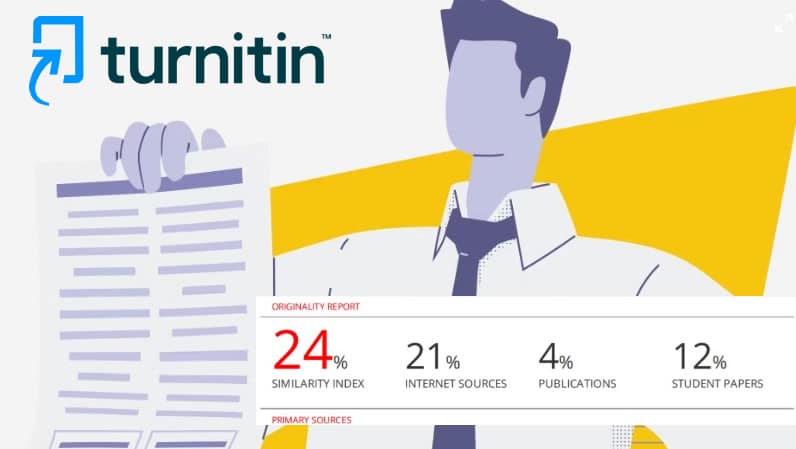
The result is a similarity score — a percentage that indicates how much of your text matches content already in Turnitin’s database. The matched sections are highlighted in the Similarity Report, along with the specific sources they match.
It is important to understand that a similarity score is not a plagiarism score. It is simply a measure of how much of your text appears elsewhere. Turnitin does not judge whether that similarity constitutes plagiarism — that judgement is made by your tutor or academic integrity officer when they review the report.
What Similarity Score Is Acceptable?
There is no single threshold that applies to every institution, department or assignment. Acceptable similarity scores vary widely depending on:
Your university’s own academic integrity policy
The nature of the assignment (a literature review will naturally have a higher score than a reflective essay)
Your subject area (scientific and legal writing often contains more standardised terminology)
Whether your bibliography and reference list are included in the check
As a general guide used by many UK universities:
Under 15% — typically considered low risk and unlikely to raise concerns
15–25% — moderate; may be reviewed depending on the nature of the matches
25–50% — likely to be reviewed carefully by your tutor
Over 50% — high risk; almost certainly flagged for investigation
However, these are guidelines only. Always check your institution’s specific policy. Some universities set thresholds as low as 10% for certain types of work, while others focus less on the percentage and more on the nature of what has been flagged.
The most important thing to remember is that context matters more than the number. A 30% score made up entirely of correctly cited quotes and a standard reference list is very different from a 30% score of uncited paraphrased content.
What Causes a High Similarity Score?
Before you can reduce your score, you need to understand what is causing it. Open your Turnitin Similarity Report and work through the highlighted sections carefully. The most common causes include:
1. Your Bibliography and Reference List
Reference lists are a very common cause of high similarity scores because they contain titles, author names and publication details that appear verbatim in Turnitin’s database. Most universities exclude bibliographies from the similarity check — check whether yours has been excluded. If not, you can usually request this or adjust the settings when you submit.
2. Direct Quotes That Are Properly Cited
Correctly cited direct quotes will still appear as matches in Turnitin. This is expected and is not a problem. If a large portion of your score is coming from properly attributed quotes, your tutor will recognise this when reviewing the report. However, if your work contains a very high proportion of direct quotes, it may be worth replacing some with paraphrases to demonstrate your own analytical engagement with the material.
3. Poor or Insufficient Paraphrasing
This is the most problematic cause. If you have paraphrased sources too closely — changing a few words but retaining the original structure and phrasing — those sections will flag as matches. This is known as mosaic plagiarism and it is the most common reason tutors take action on a high similarity score.
4. Common Phrases and Academic Terminology
Certain phrases are so widely used in academic writing that they appear in countless documents. Phrases like “this essay will argue,” “the results demonstrate” or standard discipline-specific terminology will often generate small matches across multiple sources. These are generally not a concern.
5. Missing Citations
If you have used ideas or information from a source but forgotten to add a citation, that content will flag as a match without any corresponding attribution. This is one of the most straightforward issues to fix — simply locate the original source and add the citation.
6. Copied Assignment Brief or Template Text
If your document includes text from an assignment brief, module handbook, or a template provided by your university, this will often flag as a match. Remove any such text from your submission document before running your final check.
How to Reduce Your Similarity Score
Once you have identified the causes of your high score, here are the legitimate steps you can take to bring it down:
Rewrite Poorly Paraphrased Sections
Go through each highlighted section where you have paraphrased too closely to the original. Close the source, then rewrite the section entirely in your own words — different sentence structure, different vocabulary, genuinely your own expression of the idea. Then add or check the citation. This is the single most effective step for reducing a score caused by mosaic plagiarism.
If you are struggling to paraphrase complex academic language effectively, our professional paraphrasing service can rewrite flagged sections for you, producing genuinely original language that preserves your intended meaning.
Add Missing Citations
For any matched section where the content is legitimately sourced but you have forgotten to cite it, simply add the correct citation. This will not remove the match from Turnitin, but it will demonstrate to your tutor that the material is properly attributed rather than plagiarised.
Replace Excessive Direct Quotes With Paraphrases
If a significant portion of your score is coming from direct quotes, consider whether all of them are necessary. Replace non-essential quotes with paraphrases — this reduces matched text while also demonstrating more of your own analytical thinking.
Exclude Your Bibliography
Check whether your reference list has been included in the similarity check. If so, most submission systems allow you to exclude it. A bibliography that is generating 5–10% of your score can be cleanly removed from the calculation simply by adjusting this setting.
Remove Boilerplate Text
Delete any text from your document that was not written by you — assignment briefs, template headers, module information, or any copied instructions. These serve no purpose in your submitted work and will contribute unnecessarily to your score.
Review Your Introduction and Conclusion
Introductions and conclusions often contain the highest density of common academic phrases, which can generate multiple small matches. Review these sections and rephrase any formulaic language into more natural, personal expression.
What Not to Do
When faced with a high similarity score, some students are tempted to try methods that appear to lower the percentage but are considered academic misconduct. You should avoid these entirely:
Do not use character substitution — replacing standard letters with visually similar characters from other alphabets to fool detection software. This is easily detected and treated as deliberate academic fraud.
Do not add invisible white text — inserting hidden text to dilute the percentage. Detection tools identify this immediately.
Do not use an automated spinning tool — tools that automatically replace words with synonyms often produce unnatural, low-quality writing that is also detectable and does not represent your own work.
Do not submit to multiple free checkers hoping for a lower result — different tools give different scores because they check against different databases. Your university uses Turnitin, so only a Turnitin-based check gives you an accurate picture of what your institution will see.
Any attempt to manipulate a similarity score through deceptive means is treated as a serious breach of academic integrity and carries far more severe consequences than a high score alone.
If your document contains AI-assisted writing, our AI checking service uses Turnitin to give you a full AI detection report alongside your similarity score — so you know exactly where you stand before submission.
Getting Professional Help
If your similarity score is high and your deadline is close, professional support can make a significant difference.
At Proofers, our plagiarism checking service uses Turnitin Similarity to generate a detailed report showing exactly where your matches are and what they are matching against. This gives you a clear, actionable picture of what needs to be addressed before your university runs its own check.
If the report identifies sections that need rewriting, our paraphrasing and rewriting service can rework those sections into genuinely original language — maintaining your argument and meaning while eliminating the matched content. You can then run a follow-up plagiarism check to confirm your score has come down before you submit.
Once your similarity score is at an acceptable level, our professional proofreading service ensures the rest of your document is error-free, well-structured and polished for submission.
Frequently Asked Questions
Does Turnitin save my work to its database?
When you submit work through your university’s Turnitin account, it is typically stored in Turnitin’s student paper repository and may be used for future comparisons. This is one reason why self-plagiarism is detectable — your own previous submissions are already in the system. However, when you use a third-party plagiarism checking service such as Proofers, your document is not saved to any database, meaning it will not affect your university submission.
Will resubmitting lower my score?
If your university allows resubmissions before the final deadline, you can resubmit after making changes. However, be aware that Turnitin applies a 24-hour delay before generating a new report on resubmitted work — your previous submission may show as a match in the meantime. Check your university’s resubmission policy carefully before attempting this.
My bibliography is pushing my score up — can I exclude it?
Yes, in most cases. When submitting through Turnitin, there is usually an option to exclude bibliography, quoted material and small matches from the similarity calculation. Check with your tutor or submission portal whether this option is available for your assignment. Excluding a correctly formatted reference list from the score is entirely legitimate.
Is a 0% similarity score better?
Not necessarily. A 0% score might seem ideal, but in practice it can raise questions — particularly for research-heavy work that should be engaging with published sources. A well-researched, properly cited essay will naturally have some similarity from correctly attributed quotes and references. What matters is that matched content is properly acknowledged, not that the score is as low as possible.
Can my tutor see which parts of my work are flagged?
Yes. Your tutor has access to the full Turnitin Similarity Report, which highlights every matched section and shows the source it matches against. This is why it is so important to ensure all matched content is either properly cited or genuinely rewritten — your tutor can see exactly what has been flagged and make their own judgement about whether it constitutes plagiarism.
How quickly can Proofers run a plagiarism check?
Our plagiarism checking service typically returns results within 24 hours. If you are working to a tight deadline, please contact us to discuss an expedited turnaround.
How do I submit my work to Turnitin?
If you are unsure how the submission process works, our complete guide on how to use Turnitin walks you through every step — from uploading your document to reading your similarity report correctly.
Summary
A high Turnitin similarity score before submission is stressful, but it is manageable if you approach it methodically. The key points to remember are:
A similarity score is not a plagiarism verdict — it measures matches, not intent
Always open the full report and understand what is causing your score before taking action
The most common fixable cause is poor paraphrasing — rewrite flagged sections properly in your own words
Add missing citations, exclude your bibliography and remove any boilerplate text
Never try to manipulate your score through deceptive means — the consequences are far worse than a high score
Run a second check after making changes to confirm your score has come down
Your similarity score can feel like a verdict on your work — but it is not as straightforward as a single number suggests. Understanding what a similarity score actually measures is the key to interpreting it correctly and acting on it confidently. This guide explains everything you need to know.
Most plagiarism cases at UK universities are not the result of deliberate cheating — they happen by accident. But unintentional plagiarism carries exactly the same consequences as deliberate plagiarism, making it just as important to understand and prevent. This guide explains what accidental plagiarism is, why it happens and how to make sure it never happens to you.
Plagiarism can have serious consequences for students — even when it happens by accident. A few simple habits could be the difference between a confident submission and a failed module. This guide walks you through the most effective strategies to keep your work original and your academic record intact.