You have spent weeks — perhaps months — researching, drafting and refining your work. The arguments are sound, the structure is clear and the content is exactly what it needs to be. But before it reaches its reader, there is one final and essential step: proofreading. It is the stage that separates a polished, professional document from one that undermines its own credibility with avoidable errors. And it is the stage that writers most commonly rush — or skip entirely. A single spelling mistake in a dissertation abstract, a grammatical error in a client proposal, or an inconsistent reference list in a journal submission can create a disproportionately negative impression on the reader who encounters it.
This guide explains what proofreading is, why it matters, and what a thorough proofread actually covers.
What Is Proofreading?
Proofreading is the final stage of the writing and editing process — a careful, systematic review of a finished document to identify and correct errors before it is submitted or published. A proofreader checks spelling, grammar, punctuation, formatting and consistency, ensuring that the document is accurate, readable and free from the kinds of mistakes that distract or mislead a reader.
Proofreading is distinct from editing. Editing — and specifically copy editing — addresses the quality of the writing itself: clarity, structure, flow and word choice. Proofreading comes after editing and focuses on the surface level of the text. It is the last set of eyes on a document before it reaches its audience.
Ready to have your document professionally proofread? Our professional proofreading service is carried out by UK-based editors who check every aspect of your document — spelling, grammar, punctuation, consistency and references. Documents returned within 24 hours with a full money-back guarantee. Get an instant quote today.
Why Is Proofreading Important?
Errors in written work carry a cost — and that cost is often higher than writers realise. Here is why proofreading matters across different contexts:
Academic Writing
In academic writing, errors undermine the credibility of your research. A dissertation or essay that contains spelling mistakes, grammatical errors or inconsistent referencing sends a signal to your examiner that the work has not been carefully prepared — regardless of how strong the underlying argument is. In many UK universities, written expression is assessed as part of the mark. Errors cost marks.
Professional Writing
In business and professional contexts, written communication reflects directly on you and your organisation. A report, proposal or client document containing errors creates a poor impression and can damage the credibility of both the writer and the business. Research consistently shows that readers lose trust in content that contains errors — and that first impressions formed from written communication are difficult to reverse.
Published Writing
For articles submitted to journals, magazines or online publications, proofreading is not optional — it is expected. Editors and reviewers notice errors immediately, and a poorly proofread submission is more likely to be rejected or returned for revision. A clean, error-free submission signals professionalism and respect for the reader’s time.
The Core Reason Proofreading Matters
Writers cannot reliably proofread their own work. When you have written a document, your brain knows what it intended to say — and will often read what it meant rather than what is actually on the page. An independent set of eyes catches what the writer’s eye skips over.
What Does Proofreading Cover?
A thorough proofread addresses every aspect of surface-level accuracy in a document. This includes:
Area
What Is Checked
Spelling
Misspelled words, typos, incorrect homophones (their/there/they’re), inconsistent spelling conventions (British vs American English)
Missing or misused commas, apostrophe errors, incorrect use of colons and semicolons, quotation mark conventions
Consistency
Consistent use of terminology, spelling style, capitalisation, hyphenation and formatting throughout the document
Formatting
Heading hierarchy, font consistency, spacing, paragraph alignment, page numbering
References
Consistency and accuracy of in-text citations and reference list entries, correct referencing style applied throughout
Common Errors Proofreading Catches
Some of the most common errors that proofreading identifies include:
Homophones — words that sound alike but are spelled differently and mean different things, such as their/there/they’re, affect/effect, practice/practise and its/it’s
Missing words — words that have been accidentally omitted, which the writer’s eye skips over because the brain fills in the gap
Repeated words — the the, a a — duplicated words that are easy to miss when reading quickly
Inconsistent capitalisation — inconsistent use of capital letters for proper nouns, titles or section headings
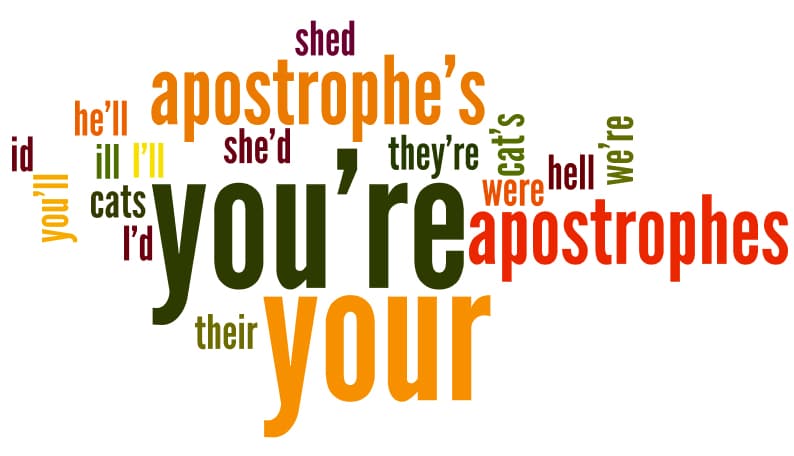
Apostrophe errors — its vs it’s, your vs you’re, possessive apostrophes incorrectly placed
American English spellings — color instead of colour, traveling instead of travelling, organize instead of organise — particularly common when writers use American software or sources
Inconsistent terminology — using different terms to refer to the same concept within the same document
While professional proofreading is the most reliable option for important documents, here are some techniques that improve the effectiveness of self-proofreading:
Step Away Before You Proofread
Once you have finished writing, put the document down and return to it later — ideally after at least a day. Distance from the text helps you read what is actually there rather than what you intended to write. The longer you leave it, the fresher your eyes will be when you return.
Read Aloud
Reading your work aloud forces you to slow down and process every word individually. Your ear will often catch errors — missing words, awkward phrasing, run-on sentences — that your eye skips over when reading silently.
Change the Format
Printing your document or changing the font and size before proofreading makes the text look unfamiliar, which helps your brain engage with it more carefully. Reading from paper catches different errors than reading on screen.
Proofread in Sections
Do not attempt to proofread an entire long document in one sitting. Work in focused sections — a chapter or section at a time — with breaks in between. Proofreading requires sustained concentration and quality deteriorates as fatigue sets in.
Check References Separately
References and citations deserve their own dedicated proofread pass. Check every in-text citation against the reference list, verify that all sources cited in the text appear in the reference list, and ensure the formatting is consistent throughout. Our guide on understanding in-text Harvard referencing covers the key conventions to check.
Remove Unnecessary Content
Proofreading is also an opportunity to remove irrelevant or redundant material. Tightening your writing improves clarity and makes errors easier to spot. Our guide on removing irrelevant wording when writing covers practical techniques for cutting unnecessary content.
When to Use a Professional Proofreader
Self-proofreading has real limitations. No matter how carefully you read your own work, you will miss errors that an independent reader would catch — because your brain is too familiar with the text to see it objectively. For important documents, professional proofreading is not a luxury but a practical investment in the quality and credibility of your work.
Consider professional proofreading when:
You are submitting a dissertation, thesis or research paper for academic assessment
You are submitting an article to a journal or publication
You are producing a business report, proposal or client document
English is not your first language
The document is long and complex — where errors are more likely and more difficult to catch
The stakes are high and the impression it makes matters
Our affordable proofreading service is used by students, academics, businesses and writers across the UK. If your document needs more than a proofread — if you want a deeper review of clarity, structure and writing quality — our copy editing service provides a comprehensive editorial review at the sentence and paragraph level.
Frequently Asked Questions
What is the purpose of proofreading?
The purpose of proofreading is to identify and correct errors in a finished document before it reaches its reader. This includes spelling mistakes, grammar errors, punctuation issues, formatting inconsistencies and reference errors. Proofreading ensures that a document is accurate, consistent and professionally presented.
Why can’t I proofread my own work effectively?
When you have written a document, your brain knows what it intended to say — and will often read what it meant rather than what is actually on the page. This is a well-documented cognitive phenomenon: familiarity with the text makes it very difficult to see it objectively. An independent proofreader reads your work without this bias and catches errors that the writer consistently misses.
What is the difference between proofreading and editing?
Proofreading focuses on surface-level errors — spelling, grammar, punctuation and formatting — and is the final check before submission. Editing, and specifically copy editing, addresses the quality of the writing itself — clarity, structure, flow and word choice. Proofreading comes after editing in the writing process. See our full guide on the differences between proofreading and copy editing.
Is proofreading allowed for academic submissions?
Yes. Professional proofreading is permitted for academic submissions at UK universities. A proofreader corrects errors in spelling, grammar and punctuation — they do not change your argument, analysis or conclusions. This is entirely consistent with academic integrity guidelines. Always check your institution’s specific policy if you are unsure.
How long does professional proofreading take?
Turnaround time depends on the length and complexity of your document. A short essay or report can typically be returned within 24 hours. A full dissertation usually takes two to four days. At Proofers, we confirm your turnaround time when you submit your document so you always know exactly when to expect it back.
What types of documents can be proofread?
Proofreading is appropriate for any written document — dissertations, theses, essays, journal articles, business reports, proposals, website content, marketing materials and more. Our professional proofreading service covers all document types for both academic and professional clients.
Summary
Proofreading is the final check of a finished document for spelling, grammar, punctuation, formatting and consistency errors
It is distinct from copy editing, which addresses the quality and clarity of the writing itself
Writers cannot reliably proofread their own work — familiarity with the text makes errors invisible
Proofreading matters in academic, professional and published writing — errors undermine credibility and cost marks
For important documents, professional proofreading is the most reliable way to ensure your work is error-free before submission
Discover how to write a thesis proposal with our detailed guide. Perfect for students, this article explains key steps for structuring and presenting a strong thesis proposal, helping you outline your research effectively and increase your chances of academic success.
Improve your academic writing with a stronger vocabulary. Our blog shares tips on enhancing your academic vocabulary to enhance your English skills. Perfect for students and professionals looking to communicate ideas clearly and effectively in essays, dissertations, and research papers.
Master the use of apostrophes with our comprehensive guide. Learn how to use apostrophes correctly for possession and contractions, avoiding common mistakes in your writing. Perfect for students and professionals looking to improve grammar and clarity in their written work.