Plagiarism Checker vs AI Checker — What Is the Difference?
Posted on 19th October by Admin
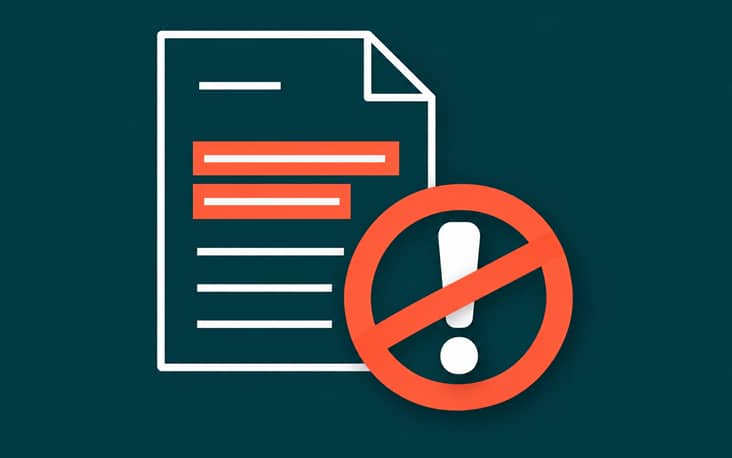
A plagiarism checker and an AI checker are not the same thing — and understanding the difference matters more than ever in 2026. Universities, publishers and employers are now using both tools to assess submitted work, and a high score on either one can have serious consequences.
This guide explains exactly what each tool does, how they work, when to use them, and why — in most cases — you need both.
Need a professional check? Our Plagiarism and AI Checking Service runs both checks and delivers a full Turnitin report — fast, confidential, and with same-day options available.
What Is a Plagiarism Checker?
A plagiarism checker scans your document and compares it against a database of existing sources — published articles, websites, journal papers, books, and previously submitted student work. It is looking for text that matches content that already exists somewhere else.
When a plagiarism checker finds a match, it flags it as a similarity. The result is usually expressed as a percentage: a similarity score of 10% means that 10% of your submitted text was found to match content in the database. This does not automatically mean you have plagiarised — common phrases, correctly cited quotations and reference lists will all show as matches — but a high score warrants closer inspection.
The most widely used plagiarism checker in UK universities is Turnitin. Others include iThenticate (used for academic publishing), Copyscape (used for web content), and Grammarly’s plagiarism checker (used by individuals). Each draws on a different database, so the results can vary between tools.
What does a plagiarism checker actually detect?
Copied text from websites, journals and publications
Passages taken from previously submitted student work
Paraphrased content that closely mirrors a source
Unattributed quotations
Text bought from essay mills or contract cheating services
What it does not detect is whether the writing was produced by a human or a machine. That is a separate question entirely — and that is where AI checkers come in.
What Is an AI Checker?
An AI checker — also called an AI writing detector or AI content detector — analyses the writing patterns in your document and attempts to determine whether the text was generated by an AI tool such as ChatGPT, Gemini or Claude.
AI writing tends to follow recognisable patterns: consistent sentence rhythm, a lack of genuine personal voice, predictable transitions and a certain statistical regularity in word choice. AI detectors are trained to spot these patterns and flag writing that looks machine-generated.
The result is typically an AI writing score: a percentage of the text that the tool believes was AI-generated. Turnitin, for example, launched its AI detection feature in April 2023 and now integrates it directly alongside its plagiarism check, producing both a similarity score and a separate AI writing score on the same report.
What does an AI checker actually detect?
Text generated by large language models such as ChatGPT, Gemini and Claude
AI-assisted writing where a human has used AI as a first draft
Passages that follow the statistical patterns typical of AI output
What it does not detect is whether content was copied from another source. A student could write entirely in their own words and still score highly on an AI checker if their writing closely mimics AI patterns — which is one of the reasons AI detection is more contested than plagiarism detection.
Key Differences Between Plagiarism Checkers and AI Checkers
It is easy to confuse these two tools because they both involve submitting a document and receiving a score. But they are doing fundamentally different things:
Feature
Plagiarism Checker
AI Checker
What it detects
Copied or closely matched text from existing sources
Writing patterns consistent with AI generation
How it works
Compares your text to a database of existing content
Analyses writing patterns and statistical regularities
Result format
Similarity score (%) with matched sources highlighted
AI writing score (%) with flagged passages highlighted
Can it be a false positive?
Yes — correct citations and common phrases are flagged
Yes — clear, formal writing can be mistaken for AI output
You are submitting academic work to a university and need to check your similarity score before the deadline
You are publishing content online and want to confirm it is original
You have used several sources and are unsure whether your referencing is adequate
You need to provide evidence of originality for a journal submission or client contract
Use an AI checker when…
You have used AI tools during your writing process and want to understand your exposure before submitting
You are an educator checking student submissions for AI-assisted writing
You are a publisher or editor who requires human-written content
You have received a high AI writing score on a Turnitin report and want to understand what triggered it
Do You Need Both?
In most cases, yes — particularly for academic work. The two checks address completely different risks:
A document can have a low similarity score (no copied text) but a high AI writing score (the writing was generated by ChatGPT and then paraphrased to reduce matches)
A document can have a high similarity score (lots of quoted or cited material) but a low AI writing score (the writing itself is clearly human)
Running only one check gives you an incomplete picture. Most UK universities that use Turnitin now receive both scores automatically on every submission — but if you are checking your own work before submitting, it is worth running both.
Turnitin is the tool most UK students will encounter, so it is worth understanding how it handles the two checks.
When a document is submitted to Turnitin, it runs two independent analyses and returns the results on the same Originality Report:
Similarity score — the percentage of your text that matches content in Turnitin’s database, which includes billions of web pages, published journals, and previously submitted student work
AI writing score — the percentage of your text that Turnitin’s AI detection model believes was generated by a large language model
Both scores appear on the same report, but they are produced by completely separate systems. A high similarity score does not affect your AI writing score, and vice versa.
If you have received a Turnitin report with a high AI writing score and are concerned, our guide on Can Turnitin Detect AI Writing in 2026? explains exactly how the detection works and what you can do about it. Our AI Content Editing Service can also help you address a high score before resubmission.
Frequently Asked Questions
Is a plagiarism checker the same as an AI checker?
No. A plagiarism checker compares your text against a database of existing sources to find matches. An AI checker analyses your writing patterns to determine whether the text was generated by an AI tool. They are measuring different things and use completely different methods.
Can a plagiarism checker detect AI writing?
Not directly. A traditional plagiarism checker will only flag AI-generated content if that exact text already exists somewhere in its database — for example, if the AI reproduced a passage verbatim from a source it was trained on. To reliably detect AI writing, you need a dedicated AI checker.
Does Turnitin check for both plagiarism and AI?
Yes. Turnitin produces both a similarity score (plagiarism check) and an AI writing score on the same report. The two checks are independent — a high score on one does not cause a high score on the other.
Which is more accurate — a plagiarism checker or an AI checker?
Plagiarism checkers are generally considered more accurate because they are comparing text against known sources — a factual match. AI checkers are probabilistic: they are making a statistical judgement about writing patterns, which means false positives are possible. Clear, formal writing can sometimes be flagged as AI-generated even when it was written by a human.
Can I get both checks done professionally?
Yes. Our Plagiarism and AI Checking Service runs a full Turnitin scan and returns both scores in a detailed report. We also offer a professional AI Content Editing Service if your document comes back with a high AI writing score and you need to address it before resubmitting.
Summary
A plagiarism checker detects copied or closely matched text from existing sources
An AI checker detects writing patterns consistent with AI-generated content
The two tools address different risks and work in completely different ways
For academic submissions, running both checks gives you the most complete picture
Turnitin produces both scores on the same report automatically
A professional checking service can run both and deliver a full report quickly
Turnitin can now detect AI-generated writing — but how accurate is it in 2026? Find out how its AI detection works, what triggers a flag, and how a professional AI content editing service can help.
Worried your university will find out you used ChatGPT? This guide explains exactly how AI detection works, what universities can realistically detect in 2026, and what your options are if you have already used AI in your work.