Is It Plagiarism to Use ChatGPT for University Work?
Posted on 19th April by Admin
Since ChatGPT became widely available in late 2022, it has transformed how students approach their work — and how universities think about academic integrity. The question of whether using AI constitutes plagiarism is now one of the most searched academic topics in the UK, and the answer is not straightforward. It depends on how AI is used, what your university’s policy says, and what you submit.What makes this particularly difficult is that policies are changing rapidly.
A university that had no AI guidance in 2022 may now treat AI submission as a serious disciplinary offence. Many students are caught out not because they intended to cheat, but because they did not realise the rules had changed — or that rules existed at all. This guide cuts through the confusion and gives you a clear, honest picture of where things stand.
50,000+
UK students caught plagiarising in a single academic year (BBC FOI data)
100+
UK universities now have specific AI use policies in place
2023
Year Turnitin launched its AI detection capability across UK institutions
Is Using ChatGPT Plagiarism?
The short answer is: it depends on how you use it — and what your university defines as academic misconduct.
Traditional plagiarism involves presenting someone else’s words or ideas as your own without attribution. ChatGPT generates text that does not come from a specific human author, which means it does not fit neatly into the standard definition of plagiarism. However, most UK universities now classify submitting AI-generated content as a form of academic misconduct — not because it is plagiarism in the traditional sense, but because it misrepresents the work as your own original effort.
The Key Distinction
Submitting AI-generated text as your own work is increasingly treated by UK universities as contract cheating or academic fraud — a separate and often more serious category than plagiarism. The consequence is the same: disciplinary action.
What UK Universities Say
Since 2023, the majority of UK universities have updated their academic integrity policies to address AI tools explicitly. While the specific rules vary between institutions, the broad consensus across UK higher education is:
Submitting AI-generated text as your own work without disclosure is academic misconduct. This applies whether you used ChatGPT, Gemini, Copilot or any other large language model.
Using AI as a research or brainstorming aid may be permitted — but the final written work must be your own.
Disclosure requirements vary. Some universities require students to declare any AI use in their work. Others prohibit AI use entirely for assessed work.
The burden of proof lies with you. If your work is flagged by AI detection software, you may be required to demonstrate that the work is genuinely yours.
The most important step you can take is to read your own university’s academic integrity policy and your module or course handbook. Policies are changing rapidly, and what was permitted in 2022 may not be permitted now.
Types of AI Use — Where the Line Is Drawn
Not all AI use is treated the same way. Here is a practical guide to where most UK universities currently draw the line:
Type of AI Use
Generally Permitted?
Notes
Using AI to generate your essay or assignment text
No
Treated as academic fraud at most UK universities
Submitting AI-generated text you have edited
No
Still considered misrepresentation of your own work
Using AI to brainstorm ideas or essay plans
Usually yes
Check your university’s specific policy — disclosure may be required
Using AI to explain concepts you then write about in your own words
Usually yes
Equivalent to using a textbook or Wikipedia for background understanding
Using AI to check grammar or spelling
Usually yes
Treated similarly to using a spell-checker
Using AI to translate your work from another language
Varies
Some universities permit this; others do not — check your policy
How Universities Detect AI-Generated Content
UK universities are increasingly using AI detection tools alongside traditional plagiarism checkers. The most widely used tools include:
Turnitin AI Detection
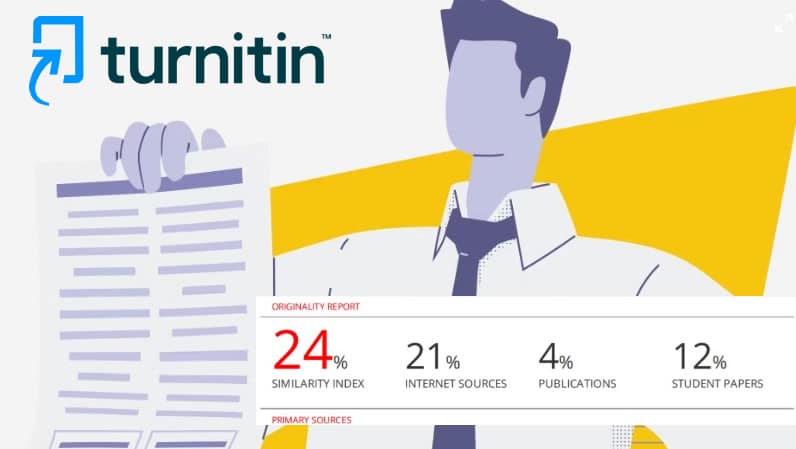
Turnitin — already used by the majority of UK universities for plagiarism checking — launched an AI writing detection capability in 2023. It analyses writing patterns, sentence structure and statistical properties of text to estimate the probability that a piece of writing was generated by an AI tool. The result is an AI writing percentage score displayed alongside the traditional similarity score.
GPTZero and Similar Tools
GPTZero and other dedicated AI detection platforms are also being used by some institutions and individual tutors. These tools use different methodologies but broadly aim to identify the statistical patterns that characterise AI-generated text.
Human Judgement
Many tutors and examiners are developing the ability to recognise AI-generated writing from its characteristic patterns — overly formal register, generic structure, lack of specific personal or contextual knowledge, and what academics describe as a “plausible but hollow” quality. Human judgement remains a significant part of the detection process.
Important to Know
AI detection tools are not infallible. They can produce false positives — flagging genuine human writing as AI-generated — and false negatives — missing AI content. However, a positive AI detection result will typically trigger a formal investigation, placing the burden on you to demonstrate the work is genuinely yours.
If you want to check your document’s AI detection score before submission, our AI checking service uses Turnitin to give you a full AI detection report within 24 hours.
Consequences of Submitting AI-Generated Work
The consequences of being found to have submitted AI-generated work without disclosure vary between institutions but can be severe. Most UK universities treat this as a serious breach of academic integrity, with potential outcomes including:
A mark of zero for the affected assignment
Failure of the module
Academic probation and a formal record on your academic file
Suspension from your studies
Permanent expulsion in the most serious cases
Withdrawal of an awarded degree if discovered after graduation
Because many institutions classify AI submission as contract cheating rather than plagiarism, the penalties may be more severe than those applied to traditional plagiarism cases. The Higher Education sector in the UK is increasingly treating AI misuse as a significant threat to the value of academic qualifications.
Legitimate Uses of AI in Academic Work
Despite the risks, AI tools can be used legitimately in academic study — provided you use them as aids rather than substitutes for your own work. Here are some approaches that are generally considered acceptable:
Research and Background Understanding
Using AI to explain a concept, summarise a field of research, or help you understand a difficult topic is generally acceptable. Think of it as using an unusually responsive and conversational encyclopaedia. The key is that the understanding you develop is then expressed in your own writing, your own words, and your own analytical voice.
Brainstorming and Planning
Asking AI to help you brainstorm essay angles, generate a list of potential arguments, or suggest a structure for your dissertation is generally considered equivalent to discussing your work with a study partner. The thinking and writing must still be yours.
Grammar and Language Checking
Using an AI-powered grammar tool to check your finished writing for errors — in the same way you might use Grammarly or a spell-checker — is widely considered acceptable. This is not the same as generating your text with AI.
For a more thorough, professional review of your writing that is fully transparent and appropriate for academic submission, our professional proofreading service checks your work for grammar, spelling, punctuation and consistency without altering your argument or voice. Our professional copy editing service goes further, addressing clarity, structure and academic style while ensuring the work remains entirely yours.
If your similarity score or AI detection score has come back higher than expected, our professional paraphrasing service can help you rewrite flagged sections in genuine human language while preserving your meaning. You can then run a follow-up plagiarism check to confirm your work meets your institution’s requirements before submission.
Frequently Asked Questions
Is using ChatGPT cheating at university?
Submitting text generated by ChatGPT as your own work is considered cheating — or more specifically, academic fraud — at most UK universities. Even if you edit the AI-generated text before submitting it, you are still misrepresenting the work as your own original effort. Using ChatGPT for background research or brainstorming, without submitting its output, is generally considered acceptable. Always check your university’s specific policy.
Can Turnitin detect ChatGPT?
Yes. Turnitin launched an AI writing detection capability in 2023 that analyses statistical properties of text to estimate the likelihood that it was generated by an AI tool. It is not infallible — it can produce false positives and false negatives — but it is now used across the majority of UK universities and is improving continuously.
What happens if ChatGPT is detected in my essay?
A positive AI detection result will typically trigger a formal investigation by your university’s academic integrity team. You may be called to explain or defend your work and demonstrate that it is genuinely yours. If the investigation finds that you submitted AI-generated content without disclosure, the outcome depends on your institution’s policy but can range from a mark of zero to expulsion in serious cases.
Is it plagiarism if I use ChatGPT but change the words?
Not in the traditional sense of plagiarism — since ChatGPT text is not attributed to a specific human author. However, submitting heavily edited AI-generated text is still considered academic misconduct at most UK universities because it misrepresents the work as your own original thinking and effort. The fact that you changed the words does not change this.
Can I use AI to help me paraphrase in my essay?
Using an AI tool to paraphrase sections of your essay — where you are essentially using AI to rewrite your own or others’ text — is risky and at many universities is not permitted. True paraphrasing is a skill that demonstrates your understanding of the source material. If you are struggling with paraphrasing, our professional paraphrasing service provides a human-written alternative that is fully transparent and academically appropriate.
My university hasn’t said anything about AI — does that mean it’s allowed?
No. The absence of a specific AI policy does not mean AI use is permitted. Most university academic integrity policies include a general principle that submitted work must be your own original effort — and submitting AI-generated text would fall foul of this principle even without a specific AI rule. When in doubt, contact your tutor or the academic integrity office for clarification before submitting.
Should I have my essay proofread before submitting?
Yes — having your essay professionally proofread before submission is a fully transparent and academically appropriate way to ensure your work is error-free. Our professional proofreading service corrects spelling, grammar and punctuation without altering your arguments or academic voice. Documents are returned within 24 hours with a full money-back guarantee.
Summary
Submitting AI-generated text as your own work is considered academic misconduct at most UK universities — regardless of whether you call it plagiarism or not
UK universities are updating their policies rapidly — read your institution’s specific guidance before using any AI tools for assessed work
Turnitin and other AI detection tools are now used across UK higher education
Using AI for background research, brainstorming and grammar checking is generally acceptable — submitting its output is not
If in doubt, write it yourself — or use transparent, professional human support
If you want support with your academic work that is fully transparent and academically appropriate, our professional proofreading service and plagiarism checking service are used by students across the UK to ensure their work meets the highest standards before submission.
Worried about AI detection or plagiarism at university?
Our AI checking service gives you a professional Turnitin AI report before you submit. Our AI content editing service makes AI-generated writing sound authentically human.
Plagiarism catches thousands of students and professionals off guard every year — often without any intention to cheat. Understanding the different types of plagiarism and their consequences could be the difference between passing and failing. This guide covers everything you need to know, including how to protect yourself before you submit.
Most plagiarism cases at UK universities are not the result of deliberate cheating — they happen by accident. But unintentional plagiarism carries exactly the same consequences as deliberate plagiarism, making it just as important to understand and prevent. This guide explains what accidental plagiarism is, why it happens and how to make sure it never happens to you.
Your similarity score can feel like a verdict on your work — but it is not as straightforward as a single number suggests. Understanding what a similarity score actually measures is the key to interpreting it correctly and acting on it confidently. This guide explains everything you need to know.