How to Avoid Plagiarism in Your Essays and Dissertations
Posted on 15th April by Admin
Plagiarism is one of the most common reasons students face academic disciplinary proceedings — and the frustrating truth is that the majority of cases are entirely unintentional. Poor note-taking, rushed paraphrasing and forgotten citations are all it takes.
The good news is that with the right habits in place, avoiding plagiarism is straightforward. This guide covers everything you need to know to protect your work, your grades and your academic reputation.
Why Avoiding Plagiarism Matters
Before diving into the strategies, it is worth understanding exactly what is at stake. Plagiarism — whether deliberate or accidental — is treated as a serious breach of academic integrity at virtually every UK university. The consequences can range from a reduced grade to permanent expulsion, and in some cases a degree can be withdrawn even after graduation if plagiarism is discovered later.
Beyond the academic consequences, plagiarism undermines the entire purpose of education. Your essays and dissertations are meant to demonstrate your own thinking, research skills and ability to engage with ideas. When unattributed material is present, even accidentally, it obscures your genuine ability and calls your work into question.
The statistics are sobering. Over 50,000 students in the UK were found to have cheated or plagiarised in a single academic year — a record high according to data obtained by the BBC under Freedom of Information requests. With plagiarism detection software now used as standard across UK universities, the risk of being caught has never been higher.
The strategies below will help you eliminate that risk entirely.
1. Always Cite Your Sources
The most fundamental rule of academic writing is simple: whenever you use someone else’s words, ideas, data or research, you must cite the source. This applies to:
Direct quotations
Paraphrased content
Statistics and data
Theories, frameworks and models
Images, diagrams and tables from external sources
Ideas you encountered in lectures or seminars
A common misconception is that only direct quotes need to be cited. In fact, any idea that is not your own requires attribution — even if you have completely rewritten it in your own words. When in doubt, always add a citation. It is far better to over-reference than to under-reference.
Make sure you are using the correct referencing style for your institution and subject. Common styles used in UK universities include Harvard, APA, MLA, OSCOLA and Vancouver. Each has specific rules for how sources are cited in-text and listed in your bibliography. If you are unsure which style to use, check your module handbook or ask your tutor.
2. Learn to Paraphrase Correctly
Poor paraphrasing — also known as patchwriting — is one of the most common causes of accidental plagiarism. It happens when a writer changes a few words in a sentence from a source but keeps the same structure and phrasing, without realising this still counts as plagiarism.
True paraphrasing is a skill that requires practice. Here is the correct process:
Read the source material carefully until you understand it fully
Close the source — do not look at it while you write
Write the idea entirely in your own words and sentence structure
Compare your version to the original to make sure it is genuinely different
Add a citation to credit the original author
The key test is this: if you removed the citation, would a reader be able to tell the idea came from somewhere else? If yes, your paraphrase is not independent enough.
If you find paraphrasing difficult — particularly when working with complex academic language — our professional paraphrasing service can help you rewrite sections of your work in clear, original language while preserving the intended meaning.
3. Develop Good Note-Taking Habits
Many cases of accidental plagiarism can be traced back to the research stage rather than the writing stage. When students take notes during research, they sometimes copy text directly from a source without marking it as a quote — then later use that text in their essay believing it to be their own paraphrase.
To prevent this, adopt the following note-taking habits from the start:
Always distinguish between direct quotes and your own notes. Use a clear system — for example, put all copied text in quotation marks in your notes, or use a different colour.
Record full source details immediately. Every time you note something from a source, write down the author, title, publication, year and page number straight away. Do not leave this until later.
Write your own summary separately. After reading a source, close it and write a brief summary in your own words. This becomes your starting point for writing, rather than the original text.
Use a reference manager. Tools like Zotero, Mendeley or even a simple spreadsheet can help you track every source you consult, making the referencing process much faster and more accurate.
4. Use Quotation Marks for Direct Quotes
When you do want to use an author’s exact words, that is perfectly acceptable in academic writing — provided you follow two rules:
Put the quoted text inside quotation marks
Add an in-text citation immediately after the quote
For example: Smith (2020, p.45) argues that “academic writing requires both precision and clarity.”
Bear in mind that most academic work should not rely too heavily on direct quotes. Your tutors want to see your own analysis and engagement with ideas, not a collection of other people’s words. As a rough guide, direct quotes should make up no more than 10–15% of your total word count. Use them sparingly — for definitions, key arguments you want to engage with directly, or particularly powerful phrasings where a paraphrase would lose something important.
For longer quotes (typically four lines or more), use a block quote format — indented from the main text — as specified by your referencing style guide.
5. Avoid Self-Plagiarism
Self-plagiarism — also called auto-plagiarism — occurs when you reuse your own previously submitted work without disclosure. This surprises many students who assume that because the work is their own, reusing it cannot be plagiarism.
In fact, most UK universities treat self-plagiarism as a serious offence for a straightforward reason: if you submit the same work twice, you are claiming credit for original effort that has already been assessed. Common forms of self-plagiarism include:
Submitting the same essay for two different modules
Reusing a substantial section of a previous assignment in a new piece of work
Recycling parts of an undergraduate dissertation in a postgraduate thesis without declaration
If you genuinely want to build on previous work — for example, developing a concept from a previous essay into a new piece of research — speak to your tutor first. In many cases this is acceptable, provided it is disclosed and the new work goes significantly beyond the original.
6. Master Your Referencing Style
Incorrect or incomplete referencing is one of the most common contributors to high similarity scores. Even when a student has genuinely engaged with sources honestly, a poorly formatted bibliography or incorrect in-text citations can cause problems.
Take the time to learn your required referencing style properly. Key things to get right include:
In-text citations — the format for citing a source within your writing (e.g. author, year, page number in Harvard style)
Bibliography vs reference list — understanding the difference and which your institution requires
Secondary sources — how to cite a source you found referenced in another work (e.g. “cited in”)
Online sources — how to cite websites, online journals and digital resources correctly
Multiple authors — the correct format when a source has two, three or more authors
Most UK universities publish detailed referencing guides on their library websites. Your institution’s guide should always be your primary reference point, as conventions can vary slightly between universities even within the same referencing style.
7. Plan Ahead and Avoid Rushing
Time pressure is one of the most significant contributors to accidental plagiarism. When students are rushing to meet a deadline, they are more likely to cut corners — copying text into their essay intending to paraphrase it later, or forgetting to add citations in the rush to get words on the page.
Building a realistic writing schedule is one of the most effective anti-plagiarism strategies available. Consider breaking your assignment into stages:
Research phase — gather and note your sources, recording full details as you go
Planning phase — structure your argument before you start writing
Drafting phase — write from your notes, not directly from sources
Citation phase — check every claim has a citation before moving on
Review phase — read through specifically looking for any uncited material
Checking phase — run a plagiarism check before final submission
Leaving adequate time for each stage means you are never in a position where rushing forces you to take shortcuts.
8. Use the Right Tools
A number of tools can help you maintain good academic integrity throughout the writing process:
Reference Managers
Tools such as Zotero (free), Mendeley (free) and EndNote automatically format citations and bibliographies in your chosen referencing style. They save significant time and dramatically reduce the risk of citation errors. Most are free to use and integrate directly with Microsoft Word.
Grammar and Writing Checkers
A good grammar checker can help you identify where your writing is unclear or where you may have inadvertently borrowed phrasing from a source. Our professional proofreading service provides a thorough human review of your writing, checking not only for grammatical accuracy but also for clarity and consistency throughout your document.
Plagiarism Checkers
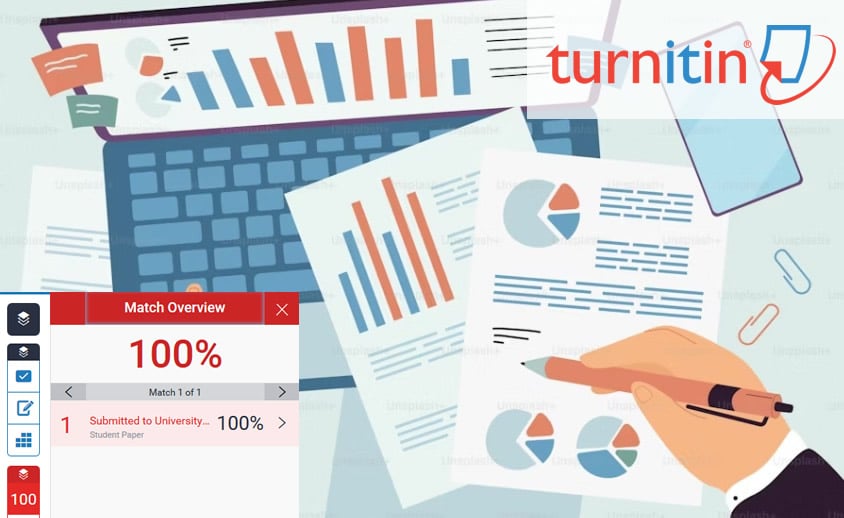
Running your work through a plagiarism checker before submission is one of the most effective safeguards available. Our professional plagiarism checking service uses Turnitin Similarity — the same software used by UK universities — to generate a detailed similarity report before your work reaches your tutor. This gives you the opportunity to identify and correct any issues while there is still time to do so.
If your document contains AI-assisted content, our AI checking service uses Turnitin to give you a full AI detection report alongside your similarity score — so you know exactly where you stand before submission.
9. Always Check Before You Submit
Even if you have followed every strategy above, running a final plagiarism check before you submit is the safest way to protect yourself. No matter how careful you have been during the writing process, a check gives you objective confirmation that your work meets the originality standards your institution expects.
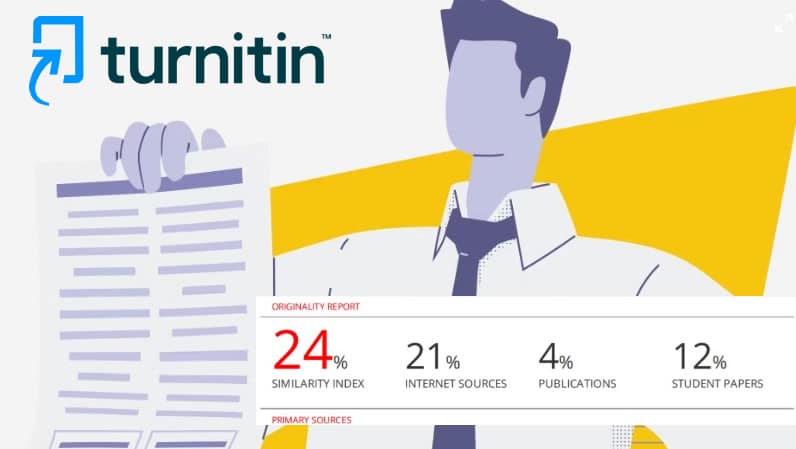
At Proofers, our plagiarism checking service provides a full Turnitin similarity report, highlighting any matched content and giving you a percentage similarity score. The report is typically returned within 24 hours, giving you time to make any necessary adjustments before your submission deadline.
If your similarity score comes back higher than expected, our paraphrasing and rewriting service can help you rework flagged sections to bring your score down while keeping your argument and meaning fully intact.
And once your work is original, properly cited and well-structured, our professional copy editing service can give it a final polish — checking not only grammar and spelling but also the clarity, flow and academic tone of your writing.
Frequently Asked Questions
What is the most common cause of accidental plagiarism?
The most common cause is poor paraphrasing — rewriting a source too closely to the original without realising it still counts as plagiarism. The second most common cause is missing or incomplete citations, often the result of rushed writing or disorganised research notes. Both are entirely preventable with the strategies outlined in this guide.
How much of my essay can match other sources before it is considered plagiarism?
There is no fixed percentage that automatically constitutes plagiarism. What matters is the nature of the matched content. Properly quoted and cited material will contribute to your similarity score but is not plagiarism. Most UK universities consider a score below 15–20% to be low risk, but thresholds vary between institutions and even between departments. Always check your institution’s own guidance.
Is it plagiarism if I forgot to add a citation by accident?
In most cases, yes — even if the omission was genuinely accidental. Universities assess the work as submitted, not the intent behind it. This is why checking your work before submission is so important. A plagiarism check gives you the opportunity to catch and correct missing citations before they become a disciplinary issue.
Does using a paraphrasing tool count as plagiarism?
Using an automated paraphrasing tool does not automatically constitute plagiarism, but it carries risks. Many paraphrasing tools produce output that still sits too close to the original source, which can flag as plagiarism on detection software. More importantly, if you submit AI-generated or tool-generated content as your own original academic work without disclosure, most universities consider this a form of academic misconduct. Always check your institution’s policy on the use of AI writing tools before using them in assessed work.
Can I use the same essay for two different assignments?
No. Reusing your own previously submitted work without disclosure — known as self-plagiarism — is considered a breach of academic integrity at most UK universities. If you want to build on previous work, you must declare this to your tutor and ensure the new submission goes significantly beyond the original piece.
What should I do if I realise I have accidentally plagiarised after submitting?
If you realise after submission that your work contains unintentional plagiarism, the best course of action is to contact your tutor or academic integrity officer proactively. Coming forward voluntarily is almost always treated more favourably than being flagged by detection software. Explain the circumstances honestly and ask for guidance on next steps.
How does a professional plagiarism check differ from free online tools?
Free online plagiarism checkers typically check against a limited database of publicly available web pages. Professional tools such as Turnitin — which Proofers uses for its plagiarism checking service — check against a vastly larger database that includes published academic journals, books, student submissions from universities worldwide and archived web content. This means a professional check is significantly more thorough and much closer to the check your university will carry out on submission.
Summary
Avoiding plagiarism is not complicated — it simply requires good habits applied consistently throughout the research and writing process. The key points to remember are:
Cite every source you use, including paraphrased material — not just direct quotes
Learn to paraphrase properly by closing the source before you write
Keep organised, clearly labelled research notes from the start
Master your institution’s required referencing style
Never reuse previously submitted work without declaring it
Plan ahead and give yourself enough time to write carefully
Always run a plagiarism check before you submit
It is also worth being aware of self-plagiarism — reusing work you have previously submitted for academic credit without declaring it. This catches many students by surprise. Our guide on what is self-plagiarism covers everything you need to know. If you want complete peace of mind before your next submission, get a professional plagiarism check from Proofers — with a full Turnitin similarity report and a money-back guarantee.
Most plagiarism cases at UK universities are not the result of deliberate cheating — they happen by accident. But unintentional plagiarism carries exactly the same consequences as deliberate plagiarism, making it just as important to understand and prevent. This guide explains what accidental plagiarism is, why it happens and how to make sure it never happens to you.
Plagiarism catches thousands of students and professionals off guard every year — often without any intention to cheat. Understanding the different types of plagiarism and their consequences could be the difference between passing and failing. This guide covers everything you need to know, including how to protect yourself before you submit.
Your similarity score can feel like a verdict on your work — but it is not as straightforward as a single number suggests. Understanding what a similarity score actually measures is the key to interpreting it correctly and acting on it confidently. This guide explains everything you need to know.